

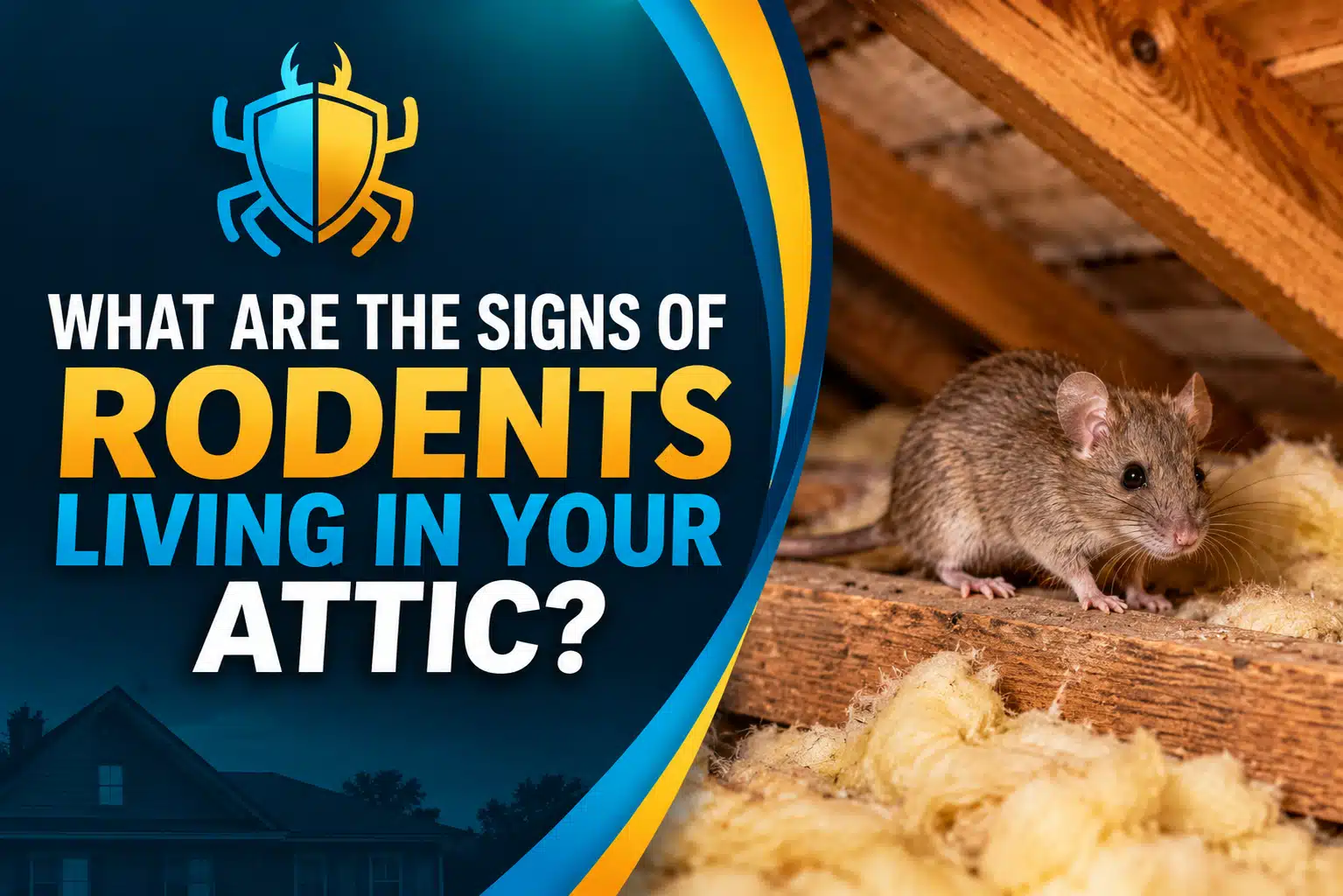
What Are the Signs of Rodents Living in Your Attic?
Hearing scratching sounds above your ceiling? Noticing unusual odors or discovering damaged insulation? These could be signs that rats or mice have made their way into your attic.
Rodents often seek shelter in quiet, undisturbed spaces, and attics provide an ideal place to nest. In Northeast Florida, homeowners should be aware of the signs of rodent activity, especially when changing weather or available food sources encourage pests to seek shelter indoors.
At Aiery Pest Control, we help homeowners identify and address rodent problems. Knowing what to look for can help you recognize a potential infestation early and determine when it is time to seek professional help.
Scratching or Scurrying Sounds in the Ceiling
One of the first signs homeowners notice is unusual noise coming from the attic or ceiling.
You might hear:
- Scratching or tapping sounds, especially at night
- Scurrying or running noises above bedrooms and living spaces
- Movement near ceiling corners, walls, or rooflines
- Repeated noises coming from the same area
Rats and mice are generally more active at night, so these sounds may become more noticeable after your household has settled down.
Although occasional noises can have other explanations, repeated scratching or movement in the attic is worth investigating.
Droppings Around the Attic
Rodent droppings are another common indication that rats or mice may be living inside your home.
You may find small, dark droppings near insulation, along attic walkways, around stored belongings, or close to potential entry points. The size and appearance can vary depending on the type of rodent.
However, it is important not to assume that every dark spot or piece of debris is rodent feces. Dust, wood fragments, dirt, and other materials can sometimes look similar.
We believe accurate identification matters. In fact, one homeowner shared an experience on our website in which material on attic insulation had been identified as rat droppings by another provider. After taking a closer look, we recognized that it was actually accumulated dirt, wood, and sediment.
If you discover suspected droppings, avoid sweeping or vacuuming them. The CDC recommends following appropriate disinfection and cleanup procedures when dealing with possible rodent waste. You can review its rodent cleanup recommendations before handling the area.
If you are unsure what you have found, a professional inspection can help determine whether rodents are actually present.
Nesting Materials in the Attic
Rats and mice gather materials to create sheltered nesting areas. These nests may be tucked into insulation, behind stored belongings, or in quiet corners of the attic.
Possible nesting materials include:
- Shredded paper or cardboard
- Pieces of fabric or clothing
- Leaves and other outdoor debris
- Fiberglass insulation
- Small pieces of wood or other soft materials
You may also notice disturbed insulation or small piles of collected debris. Finding these materials alongside droppings or scratching sounds can indicate rodent activity.
Damaged or Disturbed Insulation
Attic insulation can provide rodents with a comfortable place to burrow and build nests. As they move through it, they may leave visible paths, compressed areas, or sections that appear pulled apart.
Look for:
- Insulation that has been flattened or displaced
- Small tunnels or pathways through insulation
- Areas that appear disturbed or pulled into piles
- Nesting materials mixed into the insulation
Damaged insulation can affect how well your home maintains comfortable indoor temperatures. It may also indicate that rodents have been using the attic as a nesting area.
Unusual Odors Coming From the Attic
A persistent, unpleasant odor may also point to rodent activity.
Rodent urine, droppings, nesting materials, and deceased animals can create noticeable smells. These odors may become stronger in enclosed attic spaces or begin to travel into rooms below.
If you notice a musty or ammonia-like smell that does not have an obvious explanation, it is worth investigating. Odors alone do not confirm a rodent infestation, but they can be an important clue when combined with other signs.
Gnaw Marks and Possible Entry Points
Rats and mice can squeeze through surprisingly small openings. They may enter through gaps around rooflines, vents, utility openings, soffits, or other areas where the exterior of your home has openings or damage.
Once inside, rodents may gnaw on materials as they move through the space.
Check for:
- Small holes or gaps along the roofline
- Damaged or loose vent coverings
- Openings around pipes, cables, and utility lines
- Gnaw marks on wood, plastic, or other materials
- Signs of activity near attic access points
The CDC’s rodent prevention guidance explains the importance of identifying and sealing potential entry points to help keep rodents out.
Finding an opening does not necessarily mean rodents are currently inside, but it can indicate an opportunity for them to enter your home.
Signs of Rodents Around Your Home
Rodent activity is not always limited to the attic. You may notice additional signs around your garage, storage areas, kitchen, or exterior spaces.
Keep an eye out for droppings, gnaw marks, damaged food packaging, nesting materials, or repeated sightings of rats and mice.
When several of these signs appear together, it is a good reason to investigate further. Rodents can move between sheltered areas of a property, so addressing activity early can help prevent a small problem from becoming more extensive.
Why You Shouldn’t Ignore Rodent Activity
Even a small number of rodents can create problems if they are allowed to remain inside your home.
Rats and mice can damage insulation and other materials by chewing, nesting, and moving through enclosed spaces. Their droppings and urine can also contaminate areas where people may come into contact with them.
Rodents can reproduce quickly, which means an unnoticed problem may become more difficult to manage over time.
Identifying the source of the activity and addressing the infestation are important steps toward protecting your home.
When Should You Call a Professional for Rodent Control?
If you are hearing repeated scratching sounds, finding suspected droppings, noticing damaged insulation, or seeing signs of nesting, it may be time to have the situation evaluated.
Professional rodent control is especially worth considering when:
- You repeatedly hear movement in your attic or walls.
- You find droppings in multiple areas of your home.
- You discover nesting materials or damaged insulation.
- You notice gnaw marks or possible rodent entry points.
- You have seen rats or mice inside your home.
- You have tried addressing the problem but continue to notice activity.
It is also important to avoid disturbing suspected nesting areas or handling rodent waste without following appropriate safety precautions.
A professional evaluation can help determine whether rodents are present, identify the extent of the problem, and establish an appropriate plan for addressing it.
How We Help With Rodent Control in Northeast Florida
At Aiery Pest Control, we understand how concerning it can be to discover signs of rodents inside your home. Our rodent control services address rats and mice, with the goal of resolving current infestations and helping prevent them from returning.
We take the time to evaluate the situation and recommend an approach based on the pest activity and conditions at your property. Our goal is to help homeowners understand what is happening and take practical steps toward a solution.
We provide pest control services throughout Jacksonville, Callahan, Hilliard, North Jacksonville, Fernandina Beach, and Nassau County.
If you suspect rodents may be living in your attic, don’t wait for the signs to become more noticeable. Contact Aiery Pest Control to schedule your free home evaluation.
Call us at (904) 335-7112 to discuss your rodent concerns and learn how we can help protect your home.